
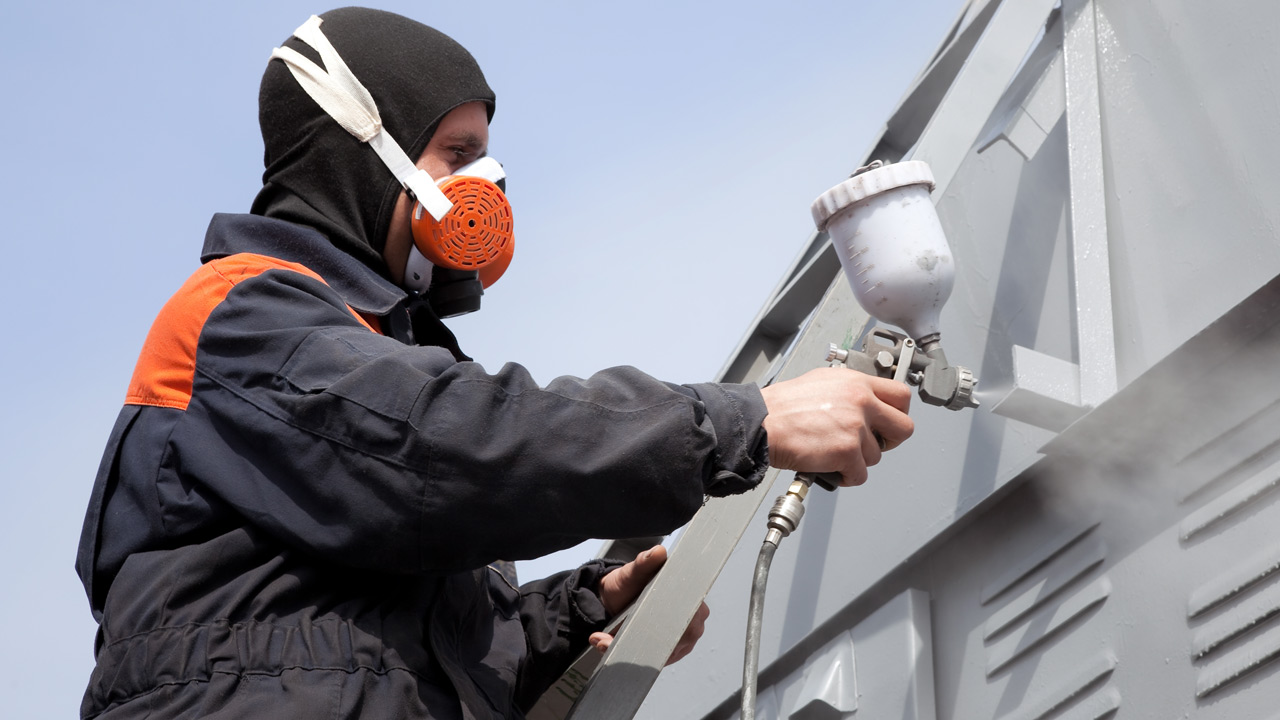


The Future of Work: Trends and Innovations in Commercial Space Design and Construction

The way we work is constantly evolving. Gone are the days of monotonous cubicles and rigid office layouts. Today’s businesses prioritize flexibility, sustainability, and employee well-being, and their workspaces must reflect these changing priorities. Here at First Nick Companies, we’re not just commercial renovation contractors – we’re partners in shaping the future of work. We … Read more

The Definitive Guide: What’s the Best Commercial Paint for me?

Commercial paint

Selecting the right commercial paint for the exterior of a commercial building is pivotal, as it not only enhances the aesthetic appeal of the structure but also protects it from environmental elements. The best options for exterior commercial painting must fulfill several criteria, including durability, weather resistance, environmental impact, and maintenance needs. This article delves … Read more

Commercial Painting ABC: What do Experts Recommend?

commercial painting

Commercial painting is a specialized field that requires not just skill and experience but also an in-depth knowledge of materials. The choice of paint in a commercial setting isn’t just about aesthetics; it involves considering durability, safety, maintenance, and the specific needs of the space being painted. Expert painters, therefore, recommend a variety of paints … Read more

Millwork Marvel: Designing Your Signature Space with Expert Insight

millwork

In the realm of interior design and architecture, millwork stands as a hallmark of craftsmanship, adding both elegance and functionality to any space. From intricate trim work to custom cabinetry, millwork offers a myriad of options to enhance the aesthetic appeal and functionality of residential and commercial properties alike. However, navigating the diverse array of … Read more

Millwork: 6 reasons why it will make your property shine

Millwork

In the realm of architectural design and interior aesthetics, one element stands out for its indispensable role in creating visually stunning and functional spaces – Millwork. Often regarded as the artisanal touch that transforms mundane structures into works of art, Millwork encompasses the crafting of wooden components such as doors, windows, molding, and cabinetry. Let’s … Read more

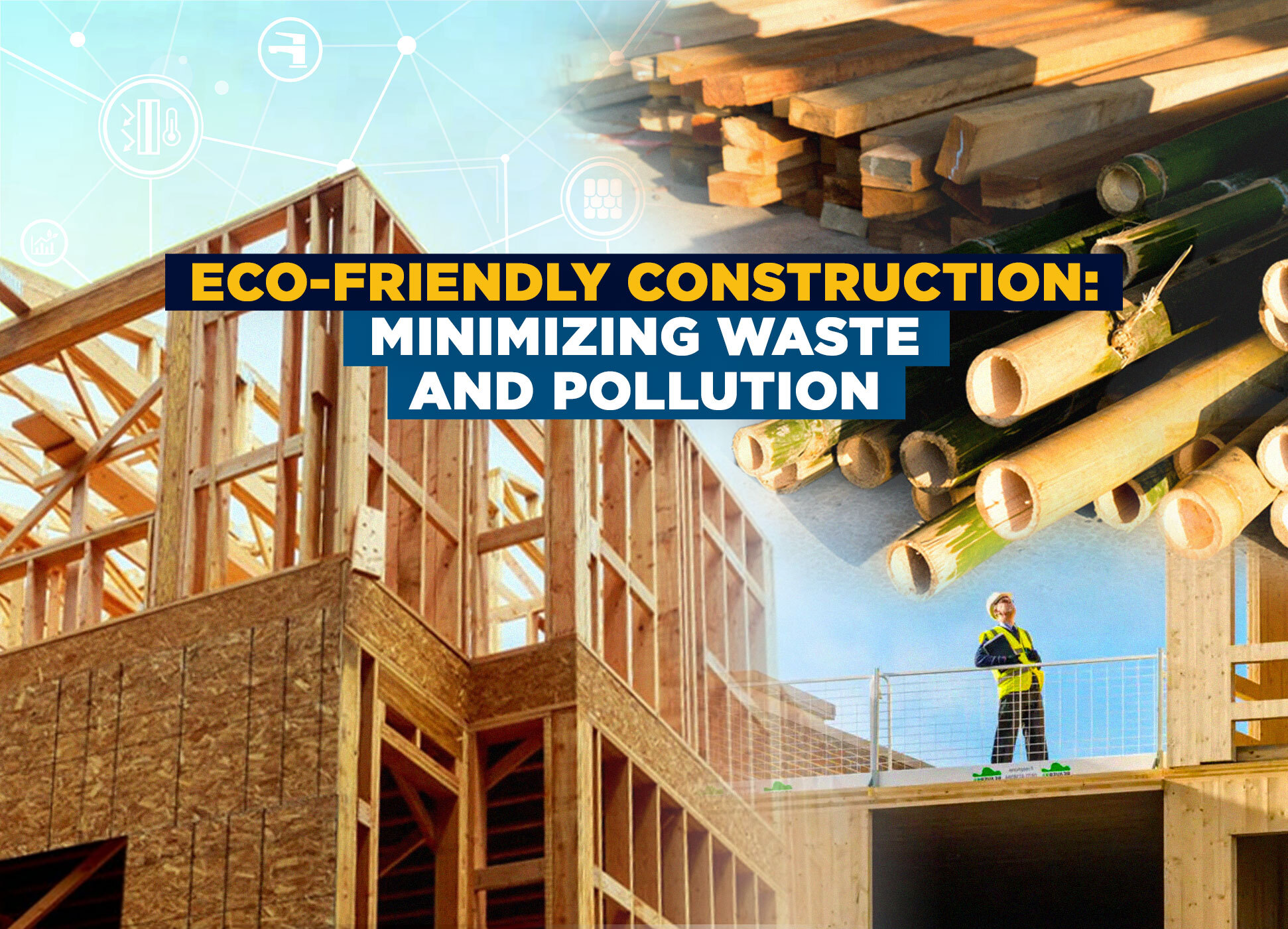
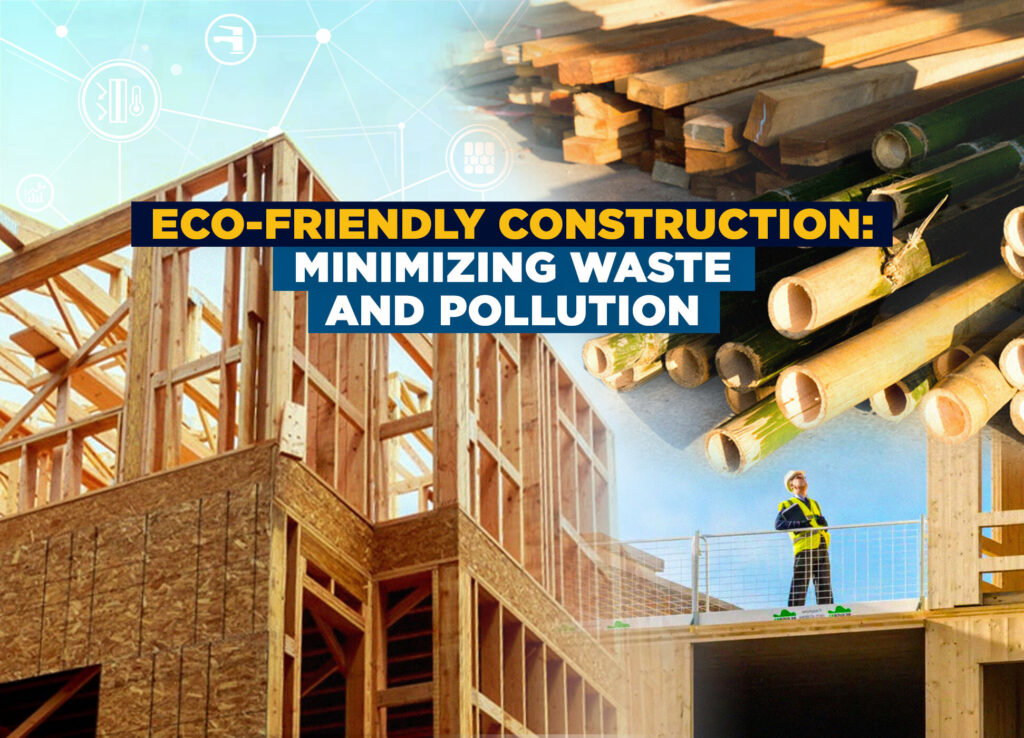
Eco-Friendly Construction: Minimizing Waste and Pollution

Commercial construction projects are renowned for their immense consumption of resources and substantial waste generation, leading to significant environmental impacts. The building sector is responsible for approximately 40% of global waste, according to the World Green Building Council. Consequently, adopting eco-friendly practices is not merely a trend but a necessity to preserve our environment. Here, we will explore some strategies to minimize waste and pollution during commercial construction projects.

  1. Opt for Sustainable Building Materials

Selection of sustainable, recycled, or certified building materials can significantly decrease waste and environmental harm. These materials often have a lower environmental footprint and can be recycled at the end of their lifecycle.

  1. Waste Segregation and Recycling

Establishing dedicated waste segregation areas on-site facilitates the recycling process. Differentiating between wood, metal, plastics, and other waste materials enables the more effective reuse and recycling of materials, diverting them away from landfills.

  1. Implement Efficient Waste Management Plan

Prioritizing waste reduction from the project’s inception is critical. A comprehensive waste management plan should be developed, outlining procedures for waste reduction, segregation, and disposal, thereby ensuring regulatory compliance and environmental protection.

  1. Optimize Energy Consumption

Reducing energy usage is a core component of eco-friendly construction. Opting for energy-efficient equipment, utilizing renewable energy sources, and implementing energy management systems can considerably diminish energy consumption and associated emissions.

  1. Water Conservation Measures

Water is a valuable resource in construction, and its conservation is crucial. Employing water-efficient appliances, capturing and reusing rainwater, and treating wastewater on-site can significantly reduce water waste.

  1. Green Construction Practices

Adopting green building standards like LEED or BREEAM can guide construction projects towards sustainability. These certifications ensure that buildings are designed, constructed, and operated to optimize environmental performance.

  1. Eco-friendly Painting Solutions

Choosing eco-friendly painting solutions can significantly reduce the environmental impact of construction projects. Opting for paints with low volatile organic compounds (VOCs) or no VOCs can minimize air pollution and the risks associated with harmful chemicals.

  1. Employ Construction Management Software

Leveraging construction management software helps in efficient resource planning and waste reduction. Digital platforms enable real-time monitoring of material usage and waste generation, facilitating immediate corrective actions.

  1. Educate and Engage Stakeholders

Creating awareness among the project stakeholders about the importance of eco-friendly construction practices is essential. Regular training sessions and workshops can equip the construction workforce with the knowledge and skills required to implement sustainable practices effectively.

  1. Implement Dust and Noise Control Measures

Construction sites are major sources of dust and noise pollution. Implementing dust suppression techniques and noise control measures like sound barriers and mufflers can mitigate their impact on the surrounding environment and communities.

The Importance of Eco-conscious Commercial Construction

By embracing eco-friendly construction practices, commercial developers not only contribute to environmental preservation but also enhance their corporate image, build customer trust, and ensure the long-term viability of their projects. Sustainable construction has myriad benefits, including cost savings, improved worker health and safety, and reduced environmental footprint.

At First Nick Companies, we are ardently committed to pioneering sustainable and eco-friendly practices in every project. We recognize the crucial role of commercial entities in fostering environmental conservation and are resolute in our pursuit of innovative, green solutions in construction. Our extensive experience and unwavering dedication to quality and sustainability make us the ideal partner for your commercial construction needs. Embrace sustainability with First Nick Companies and be a part of the movement towards a cleaner, greener future. For more information, please visit firstnick.com.

Reducing waste and pollution during commercial construction projects is a collective responsibility. Incorporating sustainable materials, optimizing resource consumption, employing green construction practices, and selecting eco-friendly partners are vital steps towards achieving this goal. As industry leaders, it is imperative to set the benchmark for sustainable construction and inspire others to follow suit.

Kosta Kritikos,

President

155-E New Boston Street | Woburn, MA 01801

O: 617.628.5130 x 1002| F: 781.305.3055 | C: 617.592.2290

www.firstnick.com | [email protected]
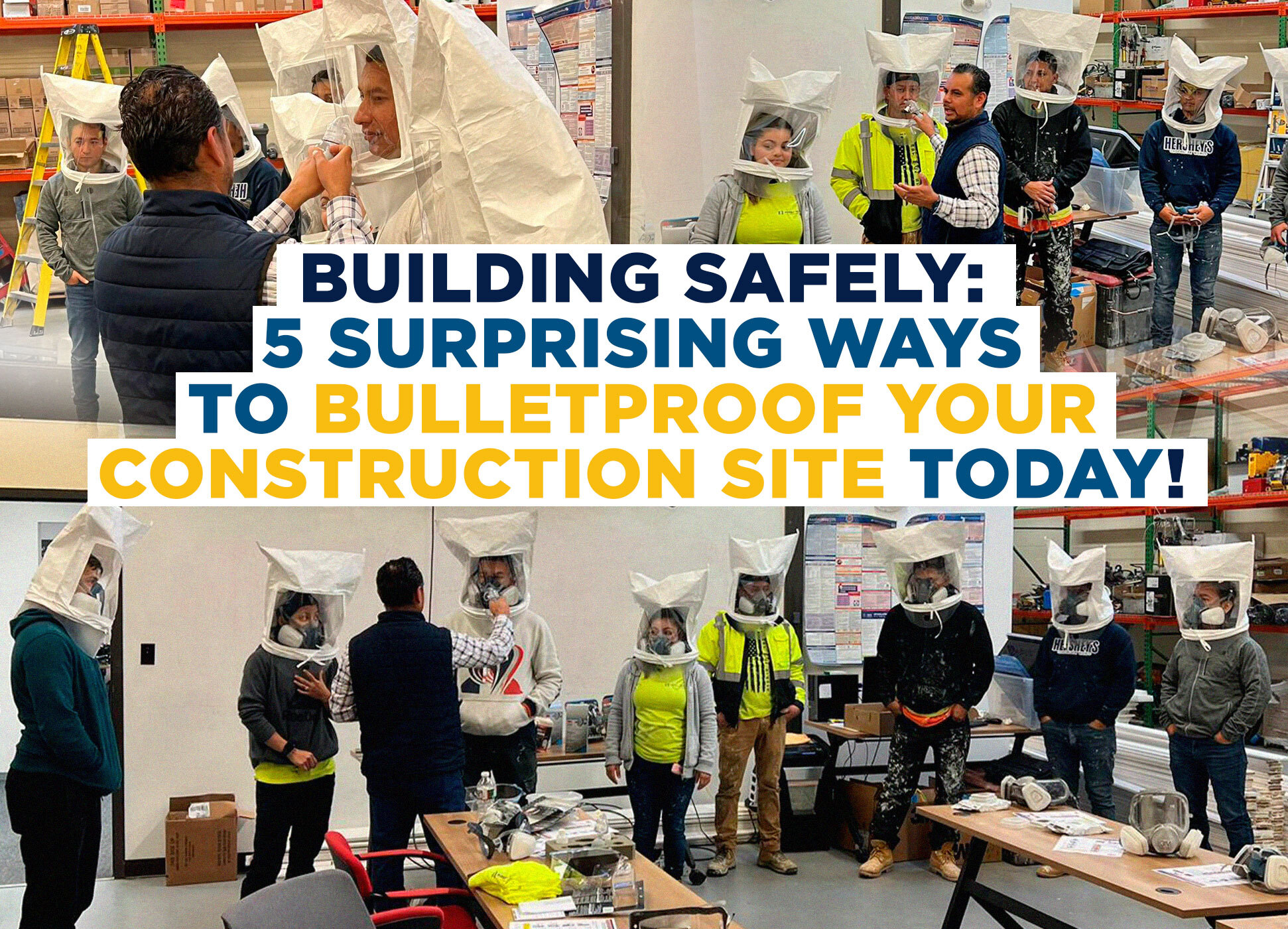
5 Ways to Bulletproof Your Construction Site Today!

In the dynamic world of construction, safety must be more than a token sentiment — it must be a deeply embedded culture. The construction industry, bustling with noise, machinery, and constant movement, is filled with potential safety hazards that can lead to tragic consequences. In 2019, according to the Bureau of Labor Statistics, there were 5,333 fatal work injuries recorded in the United States. Of these, over 20% were in construction — that’s one in five! But with strategic interventions and a commitment to safety, construction sites can transform into safe havens of productivity. Let’s dig into the most prevalent hazards and ways to prevent accidents.

1. Falls – The Silent Menace

Falls are the leading cause of fatal injuries in the construction industry. This can be due to unsecured scaffolding, unprotected edges, or improper use of fall protection gear. The prevention recipe? Ensure that safety equipment is used correctly and routinely inspected. Train workers to identify and rectify potential fall hazards.

2. Caught-in/between Hazards – The Hidden Pitfalls

These are incidents where a worker is squeezed, crushed, or otherwise trapped between two or more objects. To avoid this, machinery should be properly shut down before maintenance, and trenches should be reinforced to prevent collapse.

3. Struck-by Hazards – The Unforeseen Threats

Objects falling from heights, swinging construction materials, or vehicles moving around the site can lead to ‘struck-by’ injuries. Regular equipment checks, barricades, and high-visibility clothing can significantly mitigate these risks.

4. Electrocutions – The Silent Strike

Electrocutions mainly occur due to contact with power lines, lack of ground-fault protection, and improper use of extension cords. Routine electrical safety inspections, proper grounding, and worker training can curb such incidents.

5. Safety Culture – The Key to Prevention

Beyond addressing individual hazards, fostering a safety culture within your construction site can significantly enhance overall safety. This involves regular safety training, encouraging open communication about safety concerns, and leading by example.

But what does a safety culture look like in practice? It’s an environment where workers feel comfortable reporting potential hazards, where management actively listens and addresses these reports, and where safety is valued over speed or cost.

Safety training should be conducted at regular intervals and should be engaging, using real-life examples and possibly even virtual reality simulations. These training sessions should not just be about the physical aspects of safety but also about the psychological aspects, such as dealing with the fear of reporting safety issues.

A commitment to safety also means investing in high-quality safety equipment and maintenance. From hard hats and harnesses to safety nets and guardrails, every piece of safety equipment should be routinely inspected and maintained.

Leadership is also a vital ingredient in the safety culture mix. Managers and supervisors need to lead by example, adhering to safety rules and encouraging their teams to do the same. They should also promote open communication about safety, allowing workers to voice their concerns without fear of reprisal.

Finally, safety should never be sacrificed for speed or cost. A true safety culture values the well-being of workers above all else. The cost of cutting corners can be far higher in terms of human lives and financial consequences.

In conclusion, cultivating safety on your construction site is not a one-and-done deal; it requires persistent effort, collaboration, and commitment from every team member. From recognizing specific hazards to developing an overall safety culture, the road to a safer workplace is a journey that can save lives, improve productivity, and elevate your construction project to a whole new level. So, why wait? Take the first step towards a safer work environment today.

Kosta Kritikos,

President

155-E New Boston Street | Woburn, MA 01801

O: 617.628.5130 x 1002| F: 781.305.3055 | C: 617.592.2290

www.firstnick.com | [email protected]
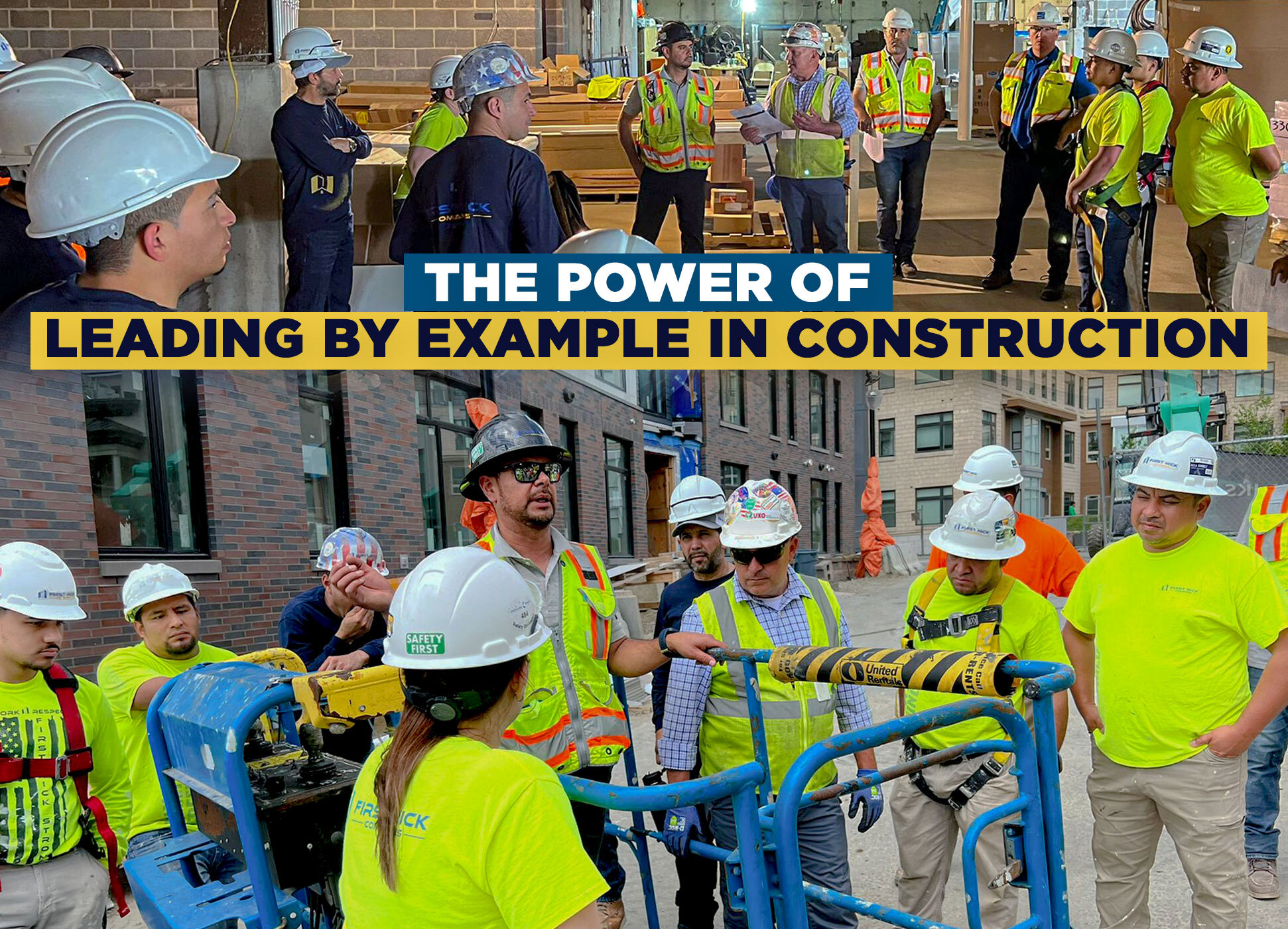
The Power of Leading By Example in Construction

https://www.youtube.com/watch?v=z6Oax6FQoiI

Effective leadership is the key to any successful construction project. At the heart of this lies the concept of leading by example, where leaders act as a model for their team, fostering a collaborative and efficient work environment. This approach to leadership is transformative, promoting transparency, safety, quality, respect, continuous learning, and emotional intelligence.

Transparency Fosters Trust

Harvard Business Review reveals that leadership transparency can boost team trust by a staggering 76%. In the construction industry, being transparent means openly communicating project goals, timelines, and challenges. Leaders who embrace this approach inspire their teams to do the same, fostering a trust-rich environment.

Safety: A Shared Priority

Construction is a high-risk field, with the Bureau of Labor Statistics highlighting its significant workplace injury rates. A leader who prioritizes safety not only decreases accident rates but also cultivates a culture of care, improving the overall team environment.

Quality: The Gold Standard

A commitment to quality is crucial for any construction project. McKinsey & Company’s research indicates that teams led by leaders dedicated to quality are 28% more likely to meet deadlines and 19% more efficient in budget adherence. Such leaders set a high bar for their teams to emulate.

Respect Breeds Productivity

Gallup’s study shows a 20% productivity boost in teams led by leaders who foster a respectful work environment. In construction, leaders who treat every team member with respect, irrespective of their role, contribute significantly to a positive and productive work culture.

Continuous Learning: The Road to Innovation

Construction is an ever-evolving field. Leaders who promote continuous learning are likely to inspire a culture of innovation in their teams. The Construction Industry Institute shows that teams that value continuous learning can improve project outcomes by up to 25%.

Emotional Intelligence: A Catalyst for Collaboration

Leaders with high emotional intelligence, capable of understanding and managing their own and their team’s emotions, create a supportive work environment. According to the Journal of Leadership & Organizational Studies, such leaders can boost team collaboration by up to 70%.

In conclusion, leading by example in construction is not just about being a figurehead. It’s about embodying the qualities you want your team to reflect. By being a role model in transparency, safety, quality, respect, learning, and emotional intelligence, leaders not only enhance the team environment but also significantly contribute to project success. This leadership style is a call to action for all construction leaders, for the improvement of our teams and the industry as a whole.

Kosta Kritikos,

President

155-E New Boston Street | Woburn, MA 01801

O: 617.628.5130 x 1002| F: 781.305.3055 | C: 617.592.2290

www.firstnick.com | [email protected]
 

7 Ways A.I Will Affect The Construction Industry

https://www.youtube.com/watch?v=a6SPZ-kpCdw

Artificial Intelligence (AI) has revolutionized many industries and changed the way we live and work. The construction industry is no exception, and AI is expected to transform the way we build our cities and infrastructure. In this blog, we’ll explore seven ways AI will affect the construction industry and the statistics that back up these findings.

#1 Improved safety
Construction sites are inherently dangerous, with workers exposed to various hazards. AI can help reduce these risks by monitoring job sites and identifying potential safety hazards before they cause harm. AI can also analyze data from past incidents to predict future risks, allowing construction managers to take proactive steps to prevent accidents. According to a report by McKinsey, AI-powered safety systems can reduce accidents by up to 25%.

#2 Increased productivity
AI can help construction companies streamline their operations and increase productivity. For example, AI-powered scheduling systems can optimize project timelines, ensure resources are allocated efficiently, and help teams work more effectively. According to a study by FMI, companies that implement AI-powered systems can increase productivity by up to 50%.

#3 Cost saving
AI can help construction companies save money by reducing waste, minimizing rework, and optimizing resource allocation. For example, AI-powered tools can identify areas where materials are being wasted, allowing companies to make adjustments and reduce costs. According to a report by McKinsey, AI can help construction companies reduce costs by up to 20%.

#4 Better project management
AI can help construction managers track progress, monitor budgets, and identify potential issues before they become problems. AI-powered tools can analyze data from multiple sources, including sensors and cameras, to provide real-time insights into project status. According to a report by MarketsandMarkets, the global market for AI in construction is expected to grow from $407 million in 2018 to $1.8 billion by 2023, driven by increased demand for project management solutions.

#5 Enhanced quality control
AI can help construction companies ensure that projects are completed to the highest standards of quality. AI-powered tools can analyze data from sensors and cameras to detect defects and deviations from specifications, allowing companies to take corrective action before they become major issues. According to a report by MarketsandMarkets, the global market for AI in quality control is expected to grow from $345 million in 2018 to $1.2 billion by 2023.

#6 Improved sustainability
AI can help construction companies reduce their environmental impact by optimizing resource use and reducing waste. For example, AI-powered tools can identify areas where energy is being wasted and suggest ways to reduce consumption. According to a report by PwC, AI-powered sustainability solutions can help construction companies reduce their carbon footprint by up to 4%.

#7 Faster and more accurate inspections
AI can help construction companies conduct inspections more quickly and accurately. AI-powered tools can analyze data from sensors and cameras to identify potential issues, allowing inspectors to focus on areas that require attention. According to a report by MarketsandMarkets, the global market for AI-powered inspection solutions is expected to grow from $524 million in 2018 to $2.2 billion by 2023.

In conclusion, AI is set to transform the construction industry in many ways, from improving safety to increasing productivity and reducing costs. As construction companies look to stay competitive in a rapidly changing market, embracing AI-powered tools and technologies will be essential.

At First Nick Companies, we are committed to providing the highest quality commercial painting services to our clients. As the construction industry evolves, we are always looking for ways to improve our operations and stay ahead of the curve. Whether you need interior or exterior painting services, we have the experience and expertise to get the job done right. Contact us today to learn more about how we can help with your next project.


Kosta Kritikos,

President

155-E New Boston Street | Woburn, MA 01801

O: 617.628.5130 x 1002| F: 781.305.3055 | C: 617.592.2290

www.firstnick.com | [email protected]
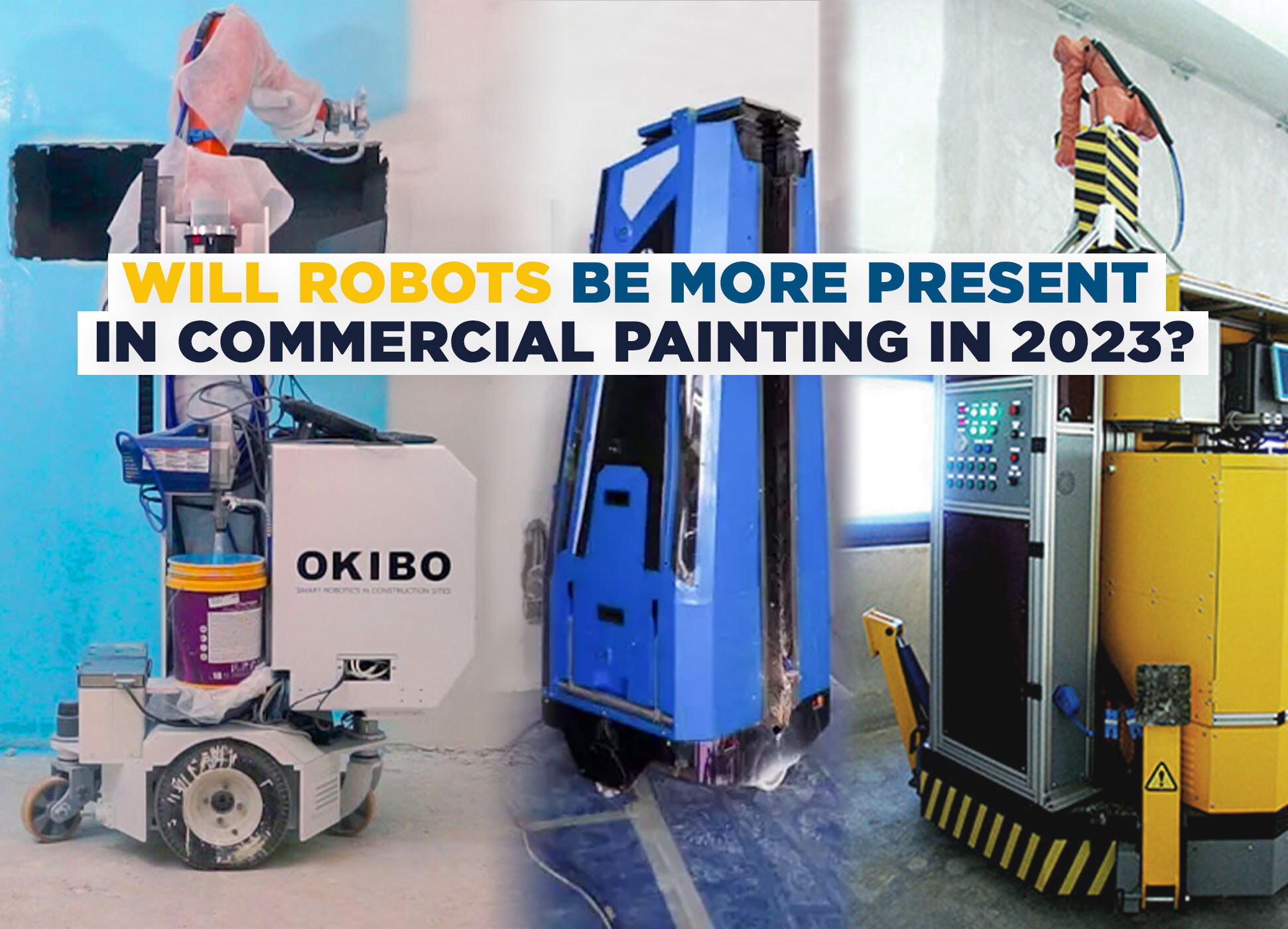
 

Will Robots Be More Present In Commercial Painting In 2023?

As technology continues to improve and evolve, many industries are beginning to incorporate automated systems into their processes. From manufacturing to healthcare, automation has become an important part of the modern workplace. But will robots be more present in commercial painting in 2023?

This is an interesting question that will have a huge impact on the future of the painting industry. Automation has the potential to make painting processes more efficient, cost-effective, and accurate, leading to greater profits for commercial painting businesses. In this blog, we’ll look at the potential for robots to be more present in commercial painting in 2023, the benefits they could bring, and the possible challenges that may arise.

We’ll also explore how painting businesses can prepare for the potential for automation and what commercial painting may look like in 2023 if robots become more common. So, if you’re interested in the future of commercial painting, stay tuned for our insights into this fascinating topic.

Overview of Automation in the Painting Industry

Automation can greatly benefit the painting industry in the coming years, boosting productivity and reducing labor costs. Many painting companies are already incorporating robotic painting systems into their operations, allowing for faster painting applications and fewer mistakes. Automated systems can also perform repetitive tasks quickly and accurately, freeing up human resources for more creative or complex tasks.

Robotic painting systems offer several potential benefits for commercial painting companies. For starters, robots can paint surfaces more quickly and evenly than human workers, meaning less time is spent on each job. Additionally, robots can accurately measure and apply precise amounts of paint, resulting in superior surface coverage and fewer mistakes. Finally, robotic systems can also reduce labor costs by eliminating the need for multiple human workers to complete a job. This can lead to greater efficiency and cost savings for commercial painting businesses.

Benefits of Automation in the Painting Industry

Robots will likely be more prevalent in the commercial painting industry this year as automation becomes a critical part of the modern workplace. Automation can help improve processes by making them more efficient, cost-effective, accurate, and less labor-intensive.

This could increase profits for commercial painting businesses, as they can produce higher quality work with fewer resources. Automation can also help reduce the risk of human error in the painting process, leading to fewer mistakes and higher customer satisfaction.

In addition to improved efficiency and cost savings, automation can also help to enhance the safety of workers by reducing the need for them to climb ladders or handle hazardous materials. Automated systems can also be programmed to work in tight spaces and difficult angles, helping to reduce the risk of injury. Automation can also help to reduce overall waste and pollution in the painting industry by more accurately applying paint and other materials, reducing the amount of energy and materials required for a job.

Overall, automation has the potential to revolutionize the painting industry in 2023. Automation can improve the efficiency, cost-effectiveness, accuracy, safety, and sustainability of the process, allowing commercial painting businesses to increase their profits while providing better customer service. As technology improves, robots will likely play an increasingly important role in the commercial painting industry.

Challenges of Automating Painting Processes

Automating painting processes could revolutionize the commercial painting industry, but it is not without its challenges. Integrating robotics into the workplace requires advanced sensors and programming to ensure accuracy and precision, which can be costly.

Additionally, training robots to paint may be complex and time-consuming, and robots may require frequent maintenance to remain operational. Furthermore, painting with robots may eliminate the need for certain manual labor, potentially leading to job losses and economic disruption.

In addition to the technical and economic challenges, the human-machine interface of painting robots may present a challenge. To be successful, both robots and humans must be able to work together harmoniously, and this can be difficult to achieve.

Robots must be programmed to understand and interpret human commands, and humans must be able to understand and interact with the robots. Automated painting processes must be designed carefully to ensure that robots do not impede the speed and accuracy of the painting process.

Overall, the potential of automated painting processes is exciting, but there are still many challenges that must be addressed before robots become a more viable option in the commercial painting industry.

Depending on the advances in technology by 2023, robots may or may not become more present in commercial painting. However, there will likely be a strong push to continue researching and developing automated painting processes to increase accuracy, cost-effectiveness, and efficiency in the industry.

In conclusion, robots will likely become more present in commercial painting in 2023. Automated painting systems can potentially make painting processes more efficient, cost-effective, and accurate, providing substantial benefits to commercial painting businesses. With the right investments in robotic technology, commercial painting companies can maximize their profits and stay competitive in an ever-changing market.

Kosta Kritikos,

President

155-E New Boston Street | Woburn, MA 01801

O: 617.628.5130 x 1002| F: 781.305.3055 | C: 617.592.2290

www.firstnick.com | [email protected]